Crop Rotations: Effects on Soil Health and System Productivity
DOI:
https://doi.org/10.63793/ISRE/0036Abstract
Background: Crop rotation (CR) is a key conservation practice for sustaining soil health and productivity, but evidence on its effects is scattered across many soils, crops and climates.
Objective: To review how CR influences soil physical, chemical and biological characteristics and the productivity of cropping systems.
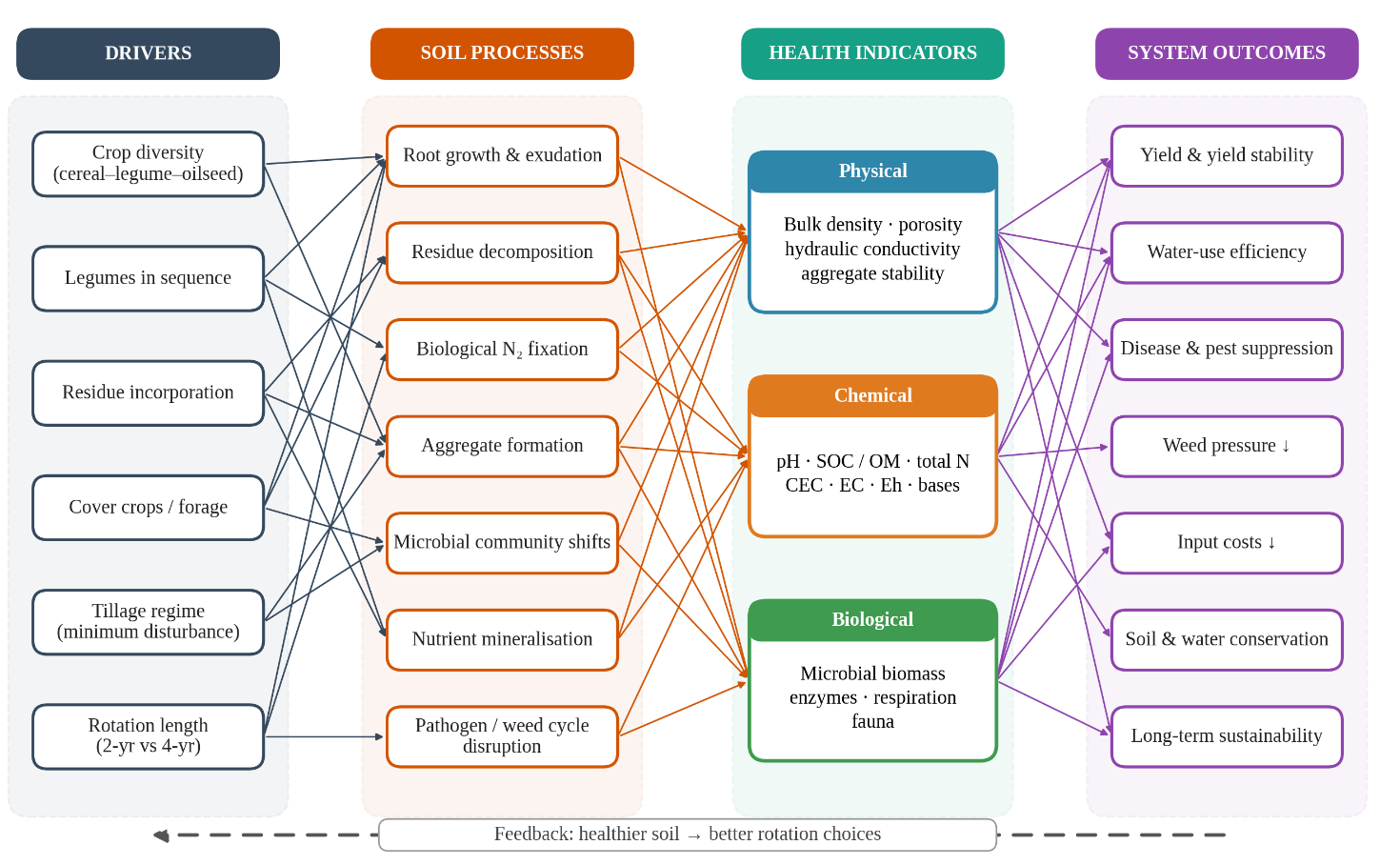
Methodology: Published field and long-term studies on rotations of cereals, legumes, vegetables and oilseed crops were reviewed and synthesised under soil physical, chemical, biological and productivity headings.
Results: Diversified rotations, particularly those including legumes and forage crops, generally reduced bulk density and improved porosity and hydraulic properties, although short-term trials showed little effect on macroporosity. Such rotations increased soil organic carbon (by up to 22% over maize–wheat), total nitrogen, available nutrients, exchangeable bases and enzyme activities (dehydrogenase by 52–79%). Rotation affected soil pH, electrical conductivity and cation exchange capacity in a system- and depth-dependent manner. Longer rotations reduced weed cover (from 40% to 20%) and soil-borne diseases (by 10–52%), and diversified rotations improved the robustness of crop productivity by 14%.
Conclusion: CR is an effective, multi-benefit strategy for sustainable soil management. Responses depend on crop sequence, soil type and duration, and the microbial mechanisms of disease suppression need further study.
Downloads
Published
How to Cite
Issue
Section
License
Copyright (c) 2026 Taseer Ahmad, Majid Nadeem, Yasir Ramzan

This work is licensed under a Creative Commons Attribution 4.0 International License.